
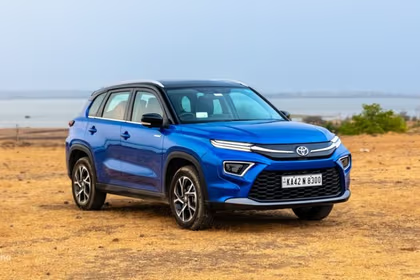
Toyota has dominated India’s hybrid car segment for years with its proven Toyota Hybrid System (THS). But the company is not resting on that lead. The Toyota new 1.5-litre hybrid engine is now in active development — a ground-up redesign of the hybrid powertrain that targets a fuel efficiency improvement of more than 15% over the outgoing system. This is not an incremental revision. It is a structural rebuild, and Indian buyers considering a hybrid purchase in 2026–27 need to understand what is coming, when it arrives, and whether it is worth the wait.
This article covers the confirmed technical details of the new system, what the 15% mileage claim actually means for Indian roads, which Toyota and Maruti Suzuki models are likely to carry it first, and how it stacks up against the current hybrid competition in India.
Why Toyota Is Rebuilding Its Hybrid System From the Ground Up
Toyota has run the Toyota Hybrid System for nearly three decades, starting with the first-generation Prius in 1997. The system evolved through five generations and now powers the Urban Cruiser Hyryder, Innova HyCross, and Camry in India. For most of that period, the THS had no serious domestic competition. That window has closed.
Chinese OEMs are now shipping high-efficiency hybrids and battery electric vehicles at prices that compress Toyota’s value proposition. India’s Corporate Average Fuel Economy (CAFE) norms tighten from 2027, placing mandatory efficiency floors on every new model sold. Customer benchmarks have moved — buyers who once compared hybrid mileage to 12–14 kmpl petrol cars now compare it to 25+ kmpl diesel alternatives. The Toyota next-generation hybrid powertrain is the company’s direct answer to all three pressures. The 15% Toyota new hybrid engine fuel efficiency gain is the headline target, and the sections below explain where that gain comes from.
Toyota’s multi-pathway vehicle platform strategy ties into why this engine exists. The company does not commit to a single technology — it develops hybrid electric vehicles (HEV), plug-in hybrid electric vehicles (PHEV), battery electric vehicles (BEV), and hydrogen fuel cell systems simultaneously. The Toyota new 1.5-litre hybrid engine sits at the HEV/PHEV layer of this plan — the highest-volume, most practically relevant segment for the Indian market, where public charging infrastructure is still building out. India’s Innova HyCross, Urban Cruiser Hyryder, and Camry all use earlier-generation hybrid systems. The new engine targets the platforms that succeed them.
Toyota New 1.5-Litre Hybrid Engine: Full Technical Specifications
Toyota announced the new engine family in late October 2026. The Toyota new 1.5-litre engine specifications confirmed are as follows.
The engine is a 1.5-litre four-cylinder petrol engine, available in two forms: a naturally aspirated engine variant and a turbocharged petrol engine variant. The naturally aspirated form is designed to replace both the current 1.5-litre three-cylinder hybrid engine and the older 1.8-litre four-cylinder unit used in earlier THS applications. Toyota has not disclosed power output figures in bhp/kW or torque in Nm for the new system as of the announcement date.
The power control unit (PCU) has been redesigned. Toyota confirmed the use of silicon carbide (SiC) power electronics in the inverter assembly — replacing the conventional silicon IGBT transistors used in the current generation. This is confirmed in Toyota’s official announcement and corroborated by Motor Illustrated’s technical review of the next-generation hybrid system. The electric motors are described as lighter and more compact electric motors with higher power density than the outgoing units, though specific output figures are not yet published.
Battery chemistry has not been officially confirmed. Toyota has not stated whether the new integrated hybrid powertrain moves from the current nickel-metal hydride (NiMH) to lithium-ion (Li-ion) cells. That detail is expected to be disclosed closer to production launch.
The table below summarises the confirmed and projected specifications alongside the current THS and its closest Indian-market competitors.
| Parameter | Current Toyota 1.5L Hybrid (THS) | Toyota New 1.5-Litre Hybrid Engine | Honda City e:HEV | Maruti Grand Vitara Strong Hybrid |
|---|---|---|---|---|
| Engine type | 1.5L 4-cyl NA petrol | 1.5L 4-cyl (NA and turbo variants) | 1.5L Atkinson-cycle NA | 1.5L 4-cyl NA petrol |
| Hybrid architecture | Series-parallel (THS) | Series-parallel (next-gen THS) | Series-dominant (i-MMD) | Series-parallel (THS) |
| Power electronics | Silicon IGBT | Silicon carbide (SiC) — confirmed | Silicon IGBT | Silicon IGBT |
| ARAI mileage | 27.97 kmpl (Hyryder) | ~32 kmpl projected (unconfirmed) | 26.5 kmpl | 27.97 kmpl |
| Efficiency gain over THS | Baseline | +15% target (Toyota claim) | — | — |
| EV-only mode | Yes (low speed) | Yes (extended range expected) | Yes | Yes |
| Carbon-neutral fuel ready | E20 (standard) | E20+ (higher blend expected) | E20 | E20 |
| India vehicle | Urban Cruiser Hyryder | TBC — Hyryder facelift likely | Honda City e:HEV | Grand Vitara |
| India availability | Available now | Not confirmed — 2026–27 expected | Available now | Available now |
All mileage figures ARAI-certified unless marked projected. Verify from official OEM sources before purchase.
Silicon Carbide Power Electronics: Why This Is the Most Important Change
Most buyers pass over “SiC semiconductors” as a component detail. It is not. The power control unit (PCU) converts DC battery power to AC for the electric motor and back, constantly, during every kilometre of driving. Every conversion cycle leaks a small amount of energy as heat. Silicon carbide (SiC) power electronics switch at higher frequencies with lower resistance than conventional IGBTs — the result is measurably lower electrical energy losses per cycle. Toyota previously used SiC technology in the Mirai hydrogen fuel cell system. Bringing it into the integrated hybrid powertrain at the 1.5-litre level, as next-generation automotive technology applied to mass-market vehicles, represents the single largest individual efficiency improvement in the new system’s architecture.
The 15% Mileage Improvement Claim: What It Means in Real-World Indian Driving
The phrase “Toyota hybrid engine 15 percent better mileage” needs careful unpacking before Indian buyers use it to set expectations.
The baseline is the current 1.5L THS as used in the Urban Cruiser Hyryder: 27.97 kmpl ARAI-certified. A 15% improvement on that figure projects to approximately 32.2 kmpl under the same test cycle. The Innova HyCross 2.0L hybrid delivers 21.1 kmpl ARAI; 15% improvement there would project to approximately 24.3 kmpl.
However, Toyota’s 15% target is not an ARAI figure. It is Toyota’s internal engineering target, measured under standardised laboratory test conditions. Indian real-world mileage from hybrid vehicles consistently runs 15–20% below ARAI figures, due to India’s traffic density, extended idling, high AC loads, and variable road quality. This means the real-world Toyota new hybrid engine fuel efficiency gain for an Indian driver is more realistically 10–12% — a meaningful improvement, but not the full 15% number buyers will see in headlines.
Three engineering changes drive the gain. First, silicon carbide (SiC) power electronics reduce inverter losses, as described above. Second, improved thermal management — the new engine uses a revised cooling system that warms the combustion chamber faster on cold starts, reducing the fuel-enrichment penalty the current engine carries during the first few minutes of operation. Third, reduced mechanical friction — new piston ring materials, revised bearing specifications, and a redesigned oil pump lower parasitic losses at the crankshaft. All three gains compound to reach the 15% target in test conditions.
Which Toyota Cars in India Will Get the New 1.5-Litre Hybrid Engine?
Toyota has not confirmed an India-specific application or launch date for the Toyota new hybrid engine India launch as of October 2026. The following placements are based on platform analysis and analyst reporting, not OEM-confirmed information, and should be treated accordingly.
The most probable first recipient is the Urban Cruiser Hyryder. It currently carries the 1.5L NA petrol THS — the exact category the new naturally aspirated 1.5L is designed to replace. The Maruti Suzuki Grand Vitara shares the same Toyota hybrid platform under the Toyota-Suzuki technology alliance. When the engine updates in the Hyryder, the Grand Vitara typically follows within one to two model cycles. The Toyota Rumion and Maruti Ertiga successor may receive hybrid variants if Toyota India confirms the multi-pathway vehicle platform strategy extends to the MPV segment. Any new compact SUV Toyota India launches on the next-generation platform would also be a natural candidate. The new engine’s modular design — covering both hybrid electric vehicle (HEV) and plug-in hybrid electric vehicle (PHEV) applications — allows Toyota to deploy it across SUVs, sedans, and MPVs without separate development costs.
India’s growing adoption of connected car technology is also relevant here: Toyota’s next-generation platform is expected to integrate deeper T-Connect and over-the-air update capability alongside the new hybrid system, giving vehicles a longer software life alongside their improved powertrain efficiency.
Will the New Engine Come to the Urban Cruiser Hyryder First?
The Hyryder is Toyota’s highest-volume integrated hybrid powertrain vehicle in India. The current 1.5-litre four-cylinder petrol engine in the Hyryder — sourced from Toyota’s THS and assembled by Suzuki under the technology alliance — is the production unit the new system directly supersedes. If Toyota India schedules a Hyryder facelift or next-generation launch in 2026–27, the new engine is the logical powertrain. No official confirmation of a Hyryder update carrying the new system has been issued as of this article’s publication. The Grand Vitara’s hybrid vehicle efficiency update would follow the Hyryder on the same timeline, given the shared platform.
Toyota New 1.5-Litre Hybrid Engine vs Current Hybrid Competition in India
Indian hybrid buyers in 2026 compare across three systems. The Toyota 1.5-litre hybrid powertrain details outlined above position the new system against two established benchmarks.
The Maruti Suzuki Grand Vitara strong hybrid uses the current THS 1.5L NA petrol engine and delivers 27.97 kmpl ARAI. The Honda City e:HEV uses a 1.5L Atkinson-cycle naturally aspirated engine in a series-dominant i-MMD architecture and delivers 26.5 kmpl ARAI. The architecture difference matters: Toyota’s THS is a series-parallel system where both the engine and the electric motor can drive the wheels directly, allowing the engine to contribute power at highway speeds without conversion losses. Honda’s i-MMD primarily uses the engine as a generator at most speeds, with the motor driving the wheels — more efficient in city traffic, less so on the highway.
The new Toyota system improves on THS efficiency through the SiC PCU and thermal management upgrades while keeping the series-parallel architecture that gives it a highway efficiency advantage. Until Toyota publishes tested production specifications for the Toyota new 1.5-litre hybrid engine, direct numerical comparison with the Honda City e:HEV is not possible. The current data suggests Toyota will lead on certified mileage when production figures are released.
Toyota’s Carbon-Neutral Fuel Compatibility: Does the New Engine Support Ethanol or Hydrogen?
Toyota has confirmed that the new hybrid architecture is designed for compatibility with carbon-neutral fuels — specifically higher ethanol blends beyond the standard E20 mandate that applies to all new cars in India from 2023 onwards. India’s gazette notification G.S.R. 911(E), issued in October 2026, mandates the rollout of E85 fuel to 183 IndianOil outlets with a target of 5,000 outlets by end-2027. Maruti Suzuki has already launched the Wagon R Flex Fuel under this programme.
Whether the Toyota next-generation hybrid powertrain supports E85 or E100 blends in its India-market specification has not been officially confirmed. Toyota’s global position is that the multi-pathway vehicle platform supports operation on carbon-neutral fuels including higher ethanol blends and, in future combustion derivatives, hydrogen. For the hybrid electric vehicle (HEV) application in India, E20 compatibility is baseline-confirmed. Higher blend compatibility will depend on Toyota India’s homologation choices and the fuel’s retail availability at launch. Buyers should wait for the India-specific spec sheet before assuming flex-fuel capability.
Tips for Indian Buyers Waiting for the Toyota New 1.5-Litre Hybrid Engine
Do not wait indefinitely if the current hybrid already meets the need. The Urban Cruiser Hyryder’s 27.97 kmpl ARAI strong hybrid system is already the most fuel-efficient petrol SUV in its segment in India. At 1,500 km per month of real-world driving, the new engine’s projected improvement translates to a saving of approximately Rs 4,000–6,000 annually on fuel costs. Evaluate whether that saving justifies delaying a purchase by 12–18 months — especially if prices for the updated model carry a premium.
Track Toyota India announcements, not Toyota global press releases. A global development announcement does not carry an India launch date. Official Toyota India press releases and ARAI homologation filings are the only reliable signals for when the Toyota 1.5-litre hybrid engine launch date applies to vehicles sold in India.
Calculate on-road price, not ex-showroom. Strong hybrid vehicles in India attract 5% GST, compared to 28% plus cess on standard petrol vehicles. This narrows the real on-road premium of a hybrid substantially. An ex-showroom price comparison understates the hybrid’s value; always compare on-road figures.
Understand the strong hybrid versus mild hybrid distinction. Toyota’s THS — the system the new engine builds on — is a strong hybrid. It can propel the vehicle on electric power alone at low speeds with the petrol engine switched off. Several competing models marketed as “hybrid” in India are mild hybrids (MHEV) that cannot do this. The new 1.5L system will be a strong hybrid; confirm this before placing it alongside any mild hybrid alternative.
Ask the dealer about battery warranty terms. Toyota India currently offers an 8-year/1,60,000 km warranty on the hybrid battery for the Hyryder and Innova HyCross. Confirm whether the new engine’s battery variant carries the same warranty terms before committing to a purchase.
FAQ: People Also Ask About Toyota New 1.5-Litre Hybrid Engine
Q1. What is the Toyota new 1.5-litre hybrid engine and when will it launch in India?
The Toyota new 1.5-litre hybrid engine is the company’s next-generation hybrid powertrain, announced in October 2026. It features a redesigned power control unit with silicon carbide (SiC) semiconductors, improved thermal management, and reduced mechanical friction, targeting more than 15% better fuel efficiency than the current THS system. A confirmed India launch date has not been issued as of October 2026. The engine is expected to arrive in India with the next Hyryder update or a new model on the same platform, though buyers should follow Toyota India’s official announcements for a confirmed timeline.
Q2. How much better mileage does Toyota’s new hybrid engine deliver?
Toyota’s internal engineering target for the Toyota hybrid engine 15 percent better mileage claim is set against standardised test cycle conditions, not ARAI certification. Applied to the current Hyryder’s 27.97 kmpl ARAI baseline, a 15% improvement projects to approximately 32 kmpl under equivalent testing. Real-world Indian driving conditions — dense traffic, high AC usage, mixed city-highway patterns — will likely deliver a 10–12% improvement over current real-world figures. Certified ARAI figures for the new system are pending official production-vehicle testing.
Q3. Which cars in India will use the Toyota new 1.5-litre hybrid engine?
No OEM-confirmed vehicle list exists as of October 2026. The most likely candidates are the Urban Cruiser Hyryder and its platform sibling, the Maruti Suzuki Grand Vitara, both of which currently carry the 1.5L THS system the Toyota new 1.5-litre hybrid engine directly succeeds. Any new compact SUV or sedan Toyota India launches on the next-generation platform could also carry the engine. Buyers should wait for official Toyota India press releases rather than acting on analyst speculation.
Q4. What is silicon carbide power electronics and why does it matter?
Silicon carbide (SiC) is a semiconductor material used in the inverter inside the power control unit (PCU). It replaces conventional IGBT transistors, switching faster and generating less heat per cycle. The practical result is lower electrical energy losses during every conversion of battery DC power to motor AC power. This efficiency gain is one of the three engineering changes that together deliver the new system’s 15% fuel economy improvement. Toyota previously used SiC in the Mirai fuel cell vehicle; deploying it in the integrated hybrid powertrain brings that technology to mass-market hybrid cars for the first time.
Q5. Is the Toyota 1.5-litre hybrid engine better than Honda City e:HEV?
The Toyota 1.5-litre hybrid powertrain details confirmed so far show a series-parallel architecture (THS next-gen) compared to Honda’s i-MMD series-dominant architecture in the City e:HEV. Toyota’s system allows both the engine and the motor to drive the wheels, which benefits highway efficiency. Honda’s system primarily uses the engine as a generator in most conditions, which benefits city stop-start efficiency. Honda City e:HEV delivers 26.5 kmpl ARAI against the current Hyryder’s 27.97 kmpl. The new Toyota system is expected to extend that lead. Definitive comparison requires production-specification figures from Toyota, which are not yet published.
Toyota’s 15% Mileage Claim Is Credible — Here Is the Honest Buyer’s Calculus
The Toyota new 1.5-litre hybrid engine is a genuine engineering step forward, not a marketing repackage. The confirmed SiC power electronics in the PCU, the improved thermal management architecture, and the reduced mechanical friction programme are each independently verifiable contributions to the 15% target. The technology is real.
For the Indian buyer, two profiles define the rational response.
Profile A — buy now: The current Urban Cruiser Hyryder strong hybrid at Rs 19–21 lakh on-road delivers 27.97 kmpl ARAI and carries an 8-year battery warranty. If the purchase need is today, waiting 12–18 months for a 10–12% real-world mileage improvement is not financially rational. The current system already leads its segment.
Profile B — plan to buy in 12–18 months: Watch for the official Toyota India announcement on the Hyryder facelift or next-generation model. If the Toyota next-generation hybrid powertrain arrives in that window at a price premium within Rs 1–1.5 lakh of the current model, the lifetime fuel savings will likely justify the difference for buyers who drive 1,500 km or more per month.
The broader context is India’s CAFE norm tightening from 2027. Toyota’s SiC electronics, thermal efficiency work, and multi-pathway platform commitment position the company structurally ahead of that regulatory shift. The new engine is not just an efficiency update — it is Toyota’s answer to the efficiency arms race that BEV competition, Chinese OEM pricing pressure, and Indian regulatory timelines have collectively forced. The Toyota new 1.5-litre hybrid engine will arrive in India. The question is only when.