
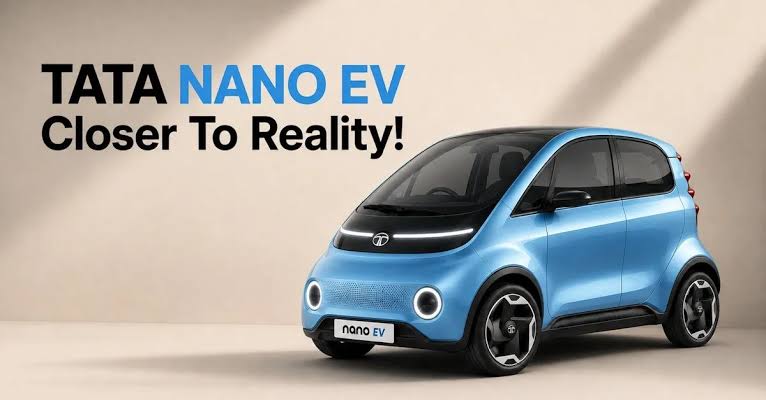
The Tata Nano EV has become one of the most searched electric car topics in India — a product that does not yet officially exist, but captures genuine buyer intent every day. The original Tata Nano was the world’s most affordable production car when it launched in 2008, and its name still carries powerful recall for Indian buyers now watching the budget electric vehicle segment take shape. As of October 2026, Tata Motors has not officially announced the Tata Nano EV launch date in India. No confirmed price, no confirmed battery specification, and no official range figure exist. Every number circulating on automotive media comes from industry estimates and speculation, not from Tata.
That search interest is not misplaced. The compact electric hatchback segment in India now has two confirmed products — the Tata Tiago EV from Rs 6.99 lakh and the MG Comet EV from Rs 7.80 lakh — and a sub-Rs 6 lakh Tata Nano electric conversion would fill a gap neither car currently occupies. There is also a real precedent: the Jayem Neo, a fleet-use electric Nano built by Jayem Automotives under a Tata collaboration. This article covers what the rumours say, what the Jayem Neo established, and what Indian EV buyers can consider right now while waiting for confirmation.
Tata Nano EV Latest News 2026 — Official Status and What the Rumours Say
The most important piece of Tata Nano EV latest news 2026 is the absence of any official news: Tata Motors has not made any official announcement about the Tata Nano EV as of October 2026 — no launch event, no booking portal, no press release, and no engineering spec sheet from the company. The car does not appear in Tata Motors’ published product pipeline for the current financial year.
Industry speculation has circulated a possible 2026 reveal across several automotive portals. Those reports are not sourced from Tata Motors. Spec sheets attached to these reports should be treated as estimates, not manufacturer data. No factory spy shots of a production-ready Tata Nano EV have been verified, and no authorised dealership has listed the car for reservation.
The interest is commercially legitimate. The MG Comet EV now starts at Rs 6.99 lakh, and the Tata Tiago EV starts at the same price. Both are established, on-sale compact EVs for city commuting. A Nano EV priced below Rs 6 lakh would undercut both and open the entry-level electric vehicle category to a wider buyer base. Tata has the battery supply chain, the e-platform architecture, and the service network to support such a product — none of that translates to an announcement, but it establishes why the market expects one.
Buyers tracking Tata Nano EV latest news should follow only Tata Motors’ official channels at tatamotors.com — third-party reports will not carry confirmed information before the company does.
The Jayem Neo — The Only Tata Nano EV That Actually Existed
The Jayem Neo is the only confirmed Tata Nano electric conversion that reached production. Built by Jayem Automotives under a formal Tata collaboration, the Neo used the original Nano body on an electric drivetrain with a 48V battery architecture. Approximately 400 units reached fleet operators — cab aggregators and corporate fleets — not retail buyers. The 48V system capped top speed and range, making the Neo unsuitable for highway use. In city fleet conditions, it delivered approximately 140-200 km real-world range and demonstrated that the Nano body adapts well to an electric drivetrain. It was discontinued without a retail launch. The Neo is not a preview of any upcoming retail Tata Nano EV, but it is the clearest technical validation Tata has produced for the concept.
Tata Nano EV Expected Price and Specifications in India — What Reports Suggest
Every figure in this section carries the same caveat: Tata Motors has confirmed none of it.
Tata Nano EV price in India, per industry estimates circulating across automotive media, sits in the Rs 5-8 lakh ex-showroom range. The Tata Nano EV expected price 2026 most commonly cited in reports is Rs 6-9 lakh — which would position the car at or just below the Tata Tiago EV’s base price of Rs 6.99 lakh. For the Nano nameplate to create a distinct value case, industry observers note that pricing below Rs 6.99 lakh is necessary. Above that threshold, the Tiago EV offers five doors, five seats, and DC fast charging that the Nano format would need to justify skipping.
Tata Nano EV specifications in India, per unconfirmed industry reports: a compact hatchback body with updated LED lighting, a digital instrument cluster, touchscreen infotainment with smartphone connectivity, power steering, and air conditioning. Safety specifications mentioned in these reports include dual front airbags and ABS with EBD. No official safety certification, crash test result, or feature confirmation exists from Tata. Motor performance estimates suggest a top speed of approximately 80-105 kph with an automatic transmission — a profile suited to small electric car for city driving use, not highway travel.
All of the above comes from industry speculation. No media drive, no pre-production reveal, and no booking event has taken place.
Why the Nano Body Still Makes Sense for an EV
The original Tata Nano concept was engineered for minimum weight, a short wheelbase, and a tight turning radius — characteristics that directly benefit a battery-electric drivetrain. A lighter body returns more range per kWh of battery capacity. A compact footprint means a smaller battery pack can cover a city commute adequately without the cost and weight of a larger unit. The Jayem Neo validated this in fleet conditions. If Tata builds a retail Tata Motors electric car on the Nano platform, the body architecture requires less rethinking than converting a heavier platform would demand. The engineering logic is clear — what remains absent is Tata’s decision to proceed.
Tata Nano EV Battery Capacity and Range Per Charge — Estimated Figures
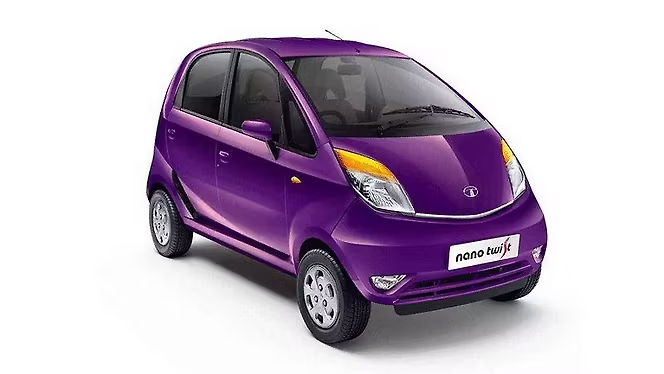
Tata Nano EV battery capacity has not been confirmed by Tata Motors. Industry speculation mentions two options: a 15 kWh pack and a 20 kWh pack. Neither figure comes from a Tata engineering document. For context, the Tata Tiago EV’s base variant uses a 19.2 kWh pack and delivers a MIDC-certified 226 km. A 15 kWh pack fitted to a Nano body — which is lighter than the Tiago EV — could plausibly return 180-200 km under a similar test cycle, though this is an estimate based on energy density comparisons, not a tested result.
Tata Nano EV range per charge, based on the same speculative reports, points to over 200 km per charge. Real-world range in Indian conditions typically runs 20-25% below any certified figure due to sustained AC use, city stop-start traffic, road surface variation, and load weight. A practical real-world planning figure from a 15 kWh pack would be approximately 160-180 km per charge in typical urban conditions.
Charging options mentioned in reports include DC fast charging with a 0-80% time under 60 minutes. Home charging on a 3.3 kW or 7.2 kW AC charger would bring a 15-20 kWh pack to full charge overnight.
The EV battery capacity context that matters for most Indian city buyers: a 15 kWh pack covering 160-180 km real-world range handles a 30-50 km daily city commute for 3-4 days between charges. Electric car running cost on home charging averages approximately Rs 0.8-1.2 per km against current domestic electricity tariffs — compared to Rs 6-8 per km for a petrol city car of similar size. The electric car charging cost advantage is the primary financial case for any budget EV, and it applies regardless of whether the Nano EV or the Tiago EV is the car in the driveway.
Tata Nano EV Booking Date — Can You Reserve One Yet?
The Tata Nano EV booking date does not exist. No booking portal has opened as of October 20, 2026. Tata Motors has not announced a production version, and no authorised dealership has listed the car for reservation under any name.
Any third-party website or portal claiming to accept Tata Nano EV bookings or advance deposits is not an official Tata source. Buyers should transact only through tatamotors.com or a Tata Motors authorised dealership. Third-party pre-booking platforms carry no manufacturer guarantee of delivery, priority allocation, or deposit refund if the car does not launch as expected.
When a launch does come, Tata’s standard EV booking process involves an official portal announcement, a token booking amount — typically between Rs 11,000 and Rs 21,000 for recent Tata EV launches — and a communicated delivery timeline at the time of booking. The Tata Punch EV and Tata Curvv EV both followed this process. The same approach will likely apply if and when the Nano EV enters Tata’s pipeline.
Practical steps for interested buyers: subscribe to Tata Motors’ official email updates, monitor tatamotors.com directly, and avoid any platform requesting payment before an official launch announcement.
Tata Nano EV vs Compact EV Alternatives — What Exists Right Now
For buyers searching the Tata Nano EV but needing a car before an official launch, two confirmed compact EVs cover the same city commuting use case today.
The Tata Tiago EV starts at Rs 6.99 lakh for the Smart variant with a 19.2 kWh battery delivering 226 km MIDC-certified range. The top Creative+ variant with the 24 kWh pack costs Rs 9.99 lakh and claims 285 km. The Tiago EV is a five-door, five-seat compact electric hatchback with DC fast charging support — approximately 100 km of range added in 18 minutes on a compatible charger. It is the closest production equivalent to what a retail Nano EV would need to compete with.
The MG Comet EV starts at Rs 7.80 lakh with a 17.3 kWh LFP battery and 230 km ARAI-certified range. At 2,974 mm long, it is shorter than any compact hatchback in the mainstream segment and parks in spaces the Tiago EV cannot. It has two doors and four seats and does not support DC fast charging — home AC charging only. For buyers in extremely dense urban environments where parking space is the primary constraint, the Comet EV’s dimensions are a meaningful advantage.
| Feature | Tata Nano EV (Expected) | Tata Tiago EV | MG Comet EV |
|---|---|---|---|
| Ex-Showroom Price | Rs 5-8 lakh (estimated) | Rs 6.99-9.99 lakh | Rs 7.80-10.07 lakh |
| Battery Capacity | 15-20 kWh (unconfirmed) | 19.2 kWh / 24 kWh | 17.3 kWh |
| Claimed Range | 200+ km (speculative) | 226-285 km (MIDC) | 230 km (ARAI) |
| Real-World Range | ~160-180 km (estimated) | ~150-230 km | ~170-200 km |
| DC Fast Charging | Unconfirmed | Yes (~18 min/100 km) | No |
| Doors / Seats | 4 doors / 4 seats (expected) | 5 doors / 5 seats | 2 doors / 4 seats |
| Availability | Not launched | Available now | Available now |
| Official Status | Unconfirmed | Confirmed, on sale | Confirmed, on sale |
Nano EV figures are industry estimates, not confirmed by Tata Motors. Tiago EV and Comet EV prices and specs are current as of October 2026.
For buyers who need a budget electric car today, the Tiago EV is the stronger all-round choice: five doors, DC fast charging, confirmed warranty, and an established service network. The Comet EV suits dense-city buyers who rank parking ease above passenger capacity. The Tata Nano EV, if it arrives below Rs 6.99 lakh, would create a new entry point — but that value case only exists with a confirmed price and a launched product.
Tips for Buyers Tracking the Tata Nano EV
Do not pay any advance deposit to unofficial sources. No authorised Tata Nano EV booking portal exists as of October 2026. Any pre-booking request from a third-party site carries no Tata Motors backing and no guaranteed refund if the product does not launch.
Follow only official channels. Tata Motors announces EV launches through tatamotors.com and its verified press releases. Social media pages and automotive portals are secondary sources — by the time they report a launch, the official announcement has already been made at the primary source.
Calculate total ownership cost while waiting. Electric car running cost on home charging sits at approximately Rs 0.8-1.2 per km. A petrol city car covers the same ground at Rs 6-8 per km. Even the Tiago EV at Rs 6.99 lakh pays back the cost premium over a comparable petrol hatchback within 3-4 years for a buyer covering 1,000-1,200 km per month. The connected vehicle features, digital instruments, and connected car technology integration expected on the Nano EV will likely mirror what the Tiago EV and Punch EV already deliver on Tata’s e-platform.
AWD and highway capability are off the table for this segment. Any Nano EV will be a city commuting EV — not a highway cruiser or an all-weather vehicle. Buyers whose primary use involves regular highway travel above 100 kph should budget for the Tata Nexon EV or Punch EV instead.
The Tata Motors EV lineup already covers most use cases. The Tiago EV, Punch EV, Nexon EV, and Curvv EV all carry Tata’s warranty terms and nationwide service network. If city commuting is the only requirement, the Tiago EV at Rs 6.99 lakh available today makes more financial sense than waiting for an unconfirmed product.
FAQ — Tata Nano EV: People Also Ask
Q1: What is the Tata Nano EV launch date in India? Tata Nano EV launch date in India has not been announced by Tata Motors as of October 2026. Industry reports suggest a possible 2026 reveal, but no official date, booking window, or production confirmation exists from the company. Buyers should monitor tatamotors.com for any official update.
Q2: What is the Tata Nano EV price in India? Tata Nano EV price in India is not confirmed. Industry estimates place the expected range at Rs 5-9 lakh ex-showroom. No Tata Motors spokesperson or official document has stated a price. Any figure circulating on third-party sites is an estimate.
Q3: What are the Tata Nano EV specifications in India? Tata Nano EV specifications in India are not officially confirmed by Tata Motors. Reports from unverified sources suggest a compact hatchback body, 15-20 kWh battery options, over 200 km estimated range, automatic transmission, digital cluster, touchscreen infotainment, dual airbags, and ABS with EBD. All figures are industry estimates.
Q4: What is the Tata Nano EV battery capacity? Tata Nano EV battery capacity has not been confirmed. Industry speculation mentions 15 kWh and 20 kWh pack options. For reference, the Tata Tiago EV uses a 19.2 kWh or 24 kWh pack with MIDC-certified ranges of 226 km and 285 km respectively. A 15 kWh pack in the lighter Nano body could plausibly return comparable city range.
Q5: What is the Tata Nano EV expected price 2026? Tata Nano EV expected price 2026, per industry reports, ranges from Rs 5 lakh to Rs 9 lakh ex-showroom. Tata Motors has confirmed no price. If the car launches below Rs 6.99 lakh — the Tiago EV’s base — it would become the most affordable entry-level electric vehicle from any major Indian OEM, and that is the only scenario where a distinct market case exists for the nameplate.
Tata Nano EV 2026: Strong Search Interest, Zero Confirmation — Here Is What to Do
The Tata Nano EV sits in an unusual position: one of the most searched electric cars in India is a car that has not been announced. The interest is real — India’s compact EV segment crossed a price and range threshold in 2025-26 where city-use battery electric cars became genuinely practical for middle-income buyers, and the Nano name carries an association with accessible pricing that no other Indian EV nameplate matches.
The case for the product arriving is genuine: Tata holds the e-platform architecture, the battery supply chain from Agratas, and the Jayem Neo’s fleet-use proof-of-concept. The Tata Motors EV lineup already spans four models across four price brackets — adding a sub-Rs 7 lakh entry below the Tiago EV would complete the range from the bottom. Nothing in Tata’s published pipeline confirms this is happening, and the Tiago EV already occupies the entry-level electric hatchback position competently.
The practical answer for buyers who need a city EV today: the Tata Nano EV is not available to buy. The Tata Tiago EV at Rs 6.99 lakh is confirmed, tested, available at dealerships, and backed by Tata’s warranty. If the Tata Nano EV does launch before the end of 2026, it deserves evaluation on confirmed specs and an official price — not on the estimates that circulate today.